Sunday, August 06, 2006

Lowdown on Zero Down

In a time when, arguably, the best remedy for what ails our national housing market should come in the form of regulatory cleansing of the numerous and prevalent “loose” lending and underwriting practices, the Federal Government seems bent, instead, on joining in the fray.

First, there was the FHA Manufactured Housing Modernization Act of 2006 (HR 4804, passed by the house overwhelmingly on July 25) that, if passed into law, would attempt to make the FHA more “competitive” be re-defining many of the limits and minimums needing to be met when qualifying a candidate for loan assistance.

Now, the sponsor of the FHA bill, Representative Patrick Tiberi (R-OH), has introduced another prospective legislative proposal, The Zero Downpayment Pilot Program Act of 2006.

Under the guidelines of this act, the Federal Government would insure a “zero-down” loan to first time buyers who meet the following basic requirements:

  1. First time home buyer seeking to purchase a single unit home (i.e. single family home or single housing unit of up to a three family dwelling) as their primary residence.
  2. Mortgage cannot exceed 100% of the appraised value of the home.
  3. Borrower must receive preparatory counseling on various loan and housing related topics from an approved third party counseling entity.
  4. Borrower’s credit must be evaluated using the Federal Housing Administration's Technology Open Scorecard (TOTAL) or a similar program.

Optionally, the borrower may also allow the lender the right to notify the third party counseling entity should the mortgage ever become 60 days delinquent. This option would allow the borrower the opportunity to rectify the delinquency prior to any action of foreclosure.

Additionally, the act, which would remain in effect until September 10th 2010, would insure a maximum of 50,000 loans per year but would require that the number of current “zero-down” loans to never exceed 10% of the FHA’s overall portfolio. Moreover, if the claim rate ever were to exceed 3.5%, the program would become suspended until the rate becomes 3.5% or less.

Given the overwhelming support shown to the FHA Modernization Act during its “roll call” vote on the floor of the House in July, this bill, positioned as a much needed assistance to lower income Americans who have been increasingly priced out of the competitive housing market, will probably generate little partisan debate.

Although, not all members of the House are without a disagreement to its passage as noted by the following excerpt of the dissenting view authored by Representative Ron Paul (R-TX):

The requirement that homebuyers make a downpayment ensures that a prospective homebuyer is a worthy credit risk and reduces the likelihood of default. After all, people are less likely to abandon property if they have invested substantial savings in the property in the form of a downpayment.

A friend of mine was informed by a mortgage broker that his business was experiencing an increase in defaults. According to this mortgage broker, one reason for this was the failure to require downpayments; private industry has excessively relied on credit history information instead of a downpayment to entice more people into the home market. H.R. 3043 authorizes the federal government to repeat this folly. Does anyone really believe the federal government will succeed where the private sector has failed? Before answering that question, my colleagues should consider that FHA foreclosure rates are already at record levels! Of course, if default rates rise, Congress can pass a new program making the taxpayers responsible for the monthly mortgage payments of holders of FHA insured loans.

H.R. 3043 will harm the economy by artificially increasing the demand for housing, causing resources to be diverted from other uses into housing to meet this government-created demand. Allocating resources based on market-distorting government programs insures that those resources will not be devoted to their highest-valued use. Thus, government interference in the economy results in a loss of economic efficiency and, more importantly, a lower standard of living for all citizens. The only policy guaranteed to maximize economic growth and the well being of citizens is to allow the actions of private individuals in a free-market to determine the allocation of resources.

Government polices have already artificially inflated the demand for housing, creating a housing bubble. While the temporary effect of this bubble may appear beneficial to homebuyers and homebuilders, eventually they will suffer when the housing bubble bursts. Encouraging more people to enter an already-inflated market will only increase the economic damage and human suffering the bursting of the housing bubble will cause.

As with the FHA Modernization bill that preceded it, this bill has the potential to benefit many first time home buyers, especially lower income buyers, who would otherwise be more susceptible to the viscous dealings of predatory lenders.

On the other hand, the “zero-down” loan, as a practice or product, is most likely the result of irrational expectations made commonplace during this particularly enthusiastic and hyper-optimistic housing cycle.

Keep in mind, these borrowers would be particularly susceptible to a housing market downturn as they, by definition, will have zero equity on the day of their closing, leaving foreclosure as the only escape route out of their loan obligation.

Should the Government really be getting into the business of reinforcing sloppy lending practices by guaranteeing loans to applicants who, during any other era, would not have been qualified?


Friday, August 04, 2006

Kindleberger’s Last Bubble

The famed economist, Charles P. Kindleberger, author of over 30 books, including the great title “Manias, Panics, and Crashes: A History of Financial Crises”, appears to have spent his final days clipping out newspaper articles in order to corroborate his intuition of a mounting real estate bubble.

This is no small bit of trivia as Kindleberger not only lived through the Great Deperssion, but was an active and astute economist publishing works throughout the 1930’s and onward.

The following is an excerpt from an interview with the Wall Street Journal published less than a year prior to Kindleberger death in July of 2003:

The object of his greatest fascination today is the real-estate market. For weeks, Mr. Kindleberger has been cutting out newspaper clippings that hint at a bubble in the housing market, most notably on the West Coast. Nationwide, median home prices are up about 7% from a year ago, even though the stock market has tanked and the economy has floundered. Over the long term, economists agree, housing prices can't continue to outpace growth in household incomes. Mr. Kindleberger says he isn't certain there is a housing bubble yet, "but I suspect it is."

The trick with spotting real-estate bubbles, he says, is that they don't always spread. In 1925, for instance, real-estate prices in Florida soared and crashed, but that didn't spread to the rest of the country. Yet he notes that something is distinctly different about the nation's housing market today, when compared with 1925. Fannie Mae and Freddie Mac, two large government-sponsored enterprises, own or guarantee nearly $3 trillion in mortgages, helping to keep the mortgage market liquid with cash. That is a boon to homeowners, but Mr. Kindleberger says he fears that Fannie Mae and Freddie Mac's deep nationwide presence in the market is fueling a speculative fire.

"Banks will make a mortgage and sell it to them. It means that the banks are ready to mortgage more and more and more and more. It's dangerous, I think," he says.

A Fannie Mae spokeswoman describes the argument as "preposterous," and notes Mr. Greenspan dismissed the chances of a housing bubble in testimony to Congress last week. Robert Van Order, chief international economist for Freddie Mac, says home prices might decelerate in the months ahead, but they're unlikely to crash because interest rates are so low, the inventory of unsold homes is also low and the economy has proven surprisingly resilient.

Yet Mr. Kindleberger isn't convinced. "If I was 30 years younger," he says, "I'd write a small book on Fannie Mae and Freddie Mac."

Given today’s real estate climate, the response by the Fannie Mae spokeswoman and the Chief Economist for Freddie Mac seem so ridiculously flimsy and comical.

It seems almost too perfect for Fannie Mae to offhandedly dismiss Kindleberger’s concern as “preposterous” by simply invoking the “Maestro said so” response.

Thursday, August 03, 2006

There goes the “Mini-Boom”

Watching the decline of America’s greatest housing boom is such a compelling spectacle that it’s easy to forget that we are not alone.

It appears that almost every industrialized nation (except for Germany and Japan) has experienced a similar astronomical run-up in prices over roughly the same period as the US and are now experiencing a similar slowdown.

Evidently, the exceptionally low interest rate environment of the new millennium was not confined to our shores and fueled, among other things, a frenzy of speculative housing activity worldwide.

Likewise, now that central bankers are beginning to tightening rates in order to head off inflation, we are seeing a worldwide slumping trend.

In August of 2005, the Bank of England, concerned about a possible economic slowdown (including a weakening of home prices), actually cut thier benchmark rate 25 basis points for the first time in over a two year period.

The move appeared to be generally accepted given that the UK’s economy was noticeably weakening and the effect on housing (i.e. reinvigorating it as it was previously "white hot") was predicted to be minimal.

"… we do not believe that a modest reduction in interest rates over the coming months would cause the housing market to re-ignite, given that affordability ratios are still very stretched on several measures," said Howard Archer, chief UK economist at Global Insight

Enter the “Mini-Boom”.

Unfortunately, for many in the UK though, the rate cut did in fact signal home buyers to jump back in the pool creating what was termed a “mini-boom” that persisted through the first half of 2006.

Today, in a move that is sure to raise concerns about the stability of housing in the UK, the Bank of England unexpectedly raised their benchmark rate 25 basis points; back to the 4.75% it was at prior to the 2005 rate reduction.

Apparently only eight of thirty eight economists surveyed by Bloomberg predicted the increase.

So, it seems concerns over inflation are becoming a trend and with central bankers worldwide tightening up on the money supply, housing markets should continue to feel the pain.

Only time will tell but there may be much that we can learn about or own hyper inflated housing market by occasionally looking abroad.

Grabbing for Straws

This week the National Association of Realtors released its June “Pending Home Sales” report which showed that nationally, pending home sales had edged up 0.4%.

The National Association of Realtors developed the “Pending Home Sales” index as a leading indicator based on a random sampling of roughly 20% of the month’s transactions for exiting home sales and indexed to the average level of contract activity set during 2001.

In an effort to use any “positive” numbers as a means of appealing to buyers, David Lereah, NAR’s Chief Economist states, “A quieting in the movement of indicators should restore confidence to home buyers who’ve been on the sidelines, waiting for the right time to get into the market, and now is the best time we’ve seen since the 1990s in terms of housing choices and flexible terms.”

As usual, looking more closely at the results one might draw a less optimistic conclusion:

- Nationally the index was down 9.6% as compared to June 2005

- The Northeast region was down 6.3% in June and down 11.6% as compared to June 2005. Currently, this region has dropped below the average activity of 2001 for which the PHSI is based.

- The West region was unchanged in June and down 14.2% as compared to June 2005.

- The Midwest region was up 1.9% in June but down 11.9% as compared to June 2005.

- The South region was up 2.5% in June but down 4.8% as compared to June 2005.

So it appears that, year over year, contract activity is dropping rather sharply with all regions, particularly the West, Midwest and the Northeast, showing significant declines.

So much for a “quieting” of movement of this indicator.

Wednesday, August 02, 2006

The Good the Bad and the Ugly

Another interesting phenomenon that seems to be occurring at this point in the housing cycle is the inability of some to accept the bad with the good.

It seems that some of the real estate industry’s best cheerleaders have ingrained in their minds a certain number of half-truths and either intentionally, or as a side-effect of being deluded by the mania, continue to spout them off at any opportunity.

Sometimes these bits of deception can be fairly obvious, for example, David Lereah’s apparent inability to ever forecast a real estate market that depreciates.

Other times, the assertions can be a bit tricky as they hold some merit but quickly lose value upon closer inspection.

Here are just a few:

  1. The housing market is NOT like the stock market.

David Lereah (Chief Economist for the National Association of realtors):

“If the house down the street is up for $50,000, but sells for $450,000, does that mean that the next-door neighbor's going to sell their house the next day because they're nervous?”

Alan Greenspan (Former Federal Reserve Chief):

"Any analogy to stock market pricing behavior and bubbles is a rather larges stretch,"

This assertion seems to be made to substantiate the stability (or lack of volatility) of the housing market versus the stock market. On the face of it, it seems plainly true. People don’t (and can’t) just trade housing like stocks.

But what does this really say about price stability?

It’s important to remember that prices are set by the participants that ARE actually buying and selling not by the one sitting on the sidelines.

This is especially true for real estate where valuations are “fuzzy” and are generally based solely on comparing (i.e. “comps”) a particular property to others that have sold recently in the same neighborhood. In a down real estate market, a small number of transactions can force prices lower as sellers compete for fewer buyers.

This is why we are now seeing an increasing number of reports of neighbors getting into ugly squabbles with each other as they disagree over listing prices. All sales reflect on all other properties in the same neighborhood.

What is more, Sellers all have different interests, some can try to hold out for the top price, others want to cut and run but given the relatively low volume of transactions and the standard of “comping”, prices can be brought down dramatically while owners who don’t sell can only look on.

So, it is true that as the housing market continues to slow, some home owners can turn a blind eye and continue to live happily in there homes without giving it a second thought, but does that mean the housing market is less volatile than the stock market?

  1. There is NO national housing market.

Michael Youngblood (Veteran Analyst of Friedman Billings Ramsey & Co.):

“The housing bubble argument is overblown, because there is no national housing market, so there can't be a national house-price bubble. However, there are bubbles in 75 of the 379 markets studied.”

Alan Greenspan:

"There is no national housing market in the United States. Local conditions dominate, even though mortgage interest rates are similar throughout the country. Home prices in Portland, Maine, do not arbitrage those in Portland, Ore. Thus, any bubbles that might occur would tend to be local, not national, in scope."

This assertion seems to be made generally to allay any fears that a deflating housing bubble might take the whole of the economy with it.

In most other eras, this statement seems to hold muster as there has apparently not been a housing correction that affected the whole of the United States since the Great Depression.

All the other well known housing corrections, such as Florida real estate bubble of the 1920’s and the east and west coast corrections of the late 1980’s were generally localized to specific markets.

In fact, in many parts of the country, the local real estate markets are considered to be “non-cyclical” as they have historically not shown the typical boom and bust pattern so well known to the coastal metro markets.

But what does this really say about the current housing bubble?

By many metrics, this current run-up is more exaggerated than any in history. In many major metro markets it’s nearing ten years since prices dramatically diverged from such basic fundamental factors as wages, rents and building costs.

By many industry insiders own admission, the real estate market surged in the “low interest” environment following the dot-com crash, and propped up the economy, creating jobs and wealth and thus preventing an even deeper recession.

It seems that almost every major metropolitan region of the United States, and frankly most of the rest of the industrialized world has experienced a similar dramatic run-up in housing prices over this period.

Are we to think that if all these “local” bubbles were to deflate simultaneously the economy would be able to easily absorb the fallout?

Additionally, the National Association of Realtors relies heavily on national housing numbers as a means establishing the state of the housing market in their periodic reports. Granted, they also produce regional numbers (east, west, central, south) but the national numbers are generally the “top line” numbers picked up and reported by the news media.

It seems obvious to most that changes in the national median home price might have little in connection with changes in the median price of one of the US’s more hyper-inflated cities such as Boston or San Francisco.

Why would industry insiders play both sides of the picture? That is, assert that there is NO national market when addressing the possibility of a housing bubble, but rely on national numbers when reporting on the status of the housing market.

  1. The historic run-up in the housing market propped up the economy during the 2001 – 2002 recession, but won’t drive it in to recession as it deflates.

David Lereah:

“The recent U.S. real estate boom has made money for an incredible number of households in America. In fact, in 2001 and 2002, many economists (including me) claimed that real estate was the only sector propping up the economy and keeping it from full-blown free fall.”

“During the first four years of this decade (2000-2004), home owners and investors in residential real estate collectively enjoyed a $4.6 trillion increase in the value of their properties!”

“housing contributed to 68 percent of economic growth last year, which is just an incredible statistic. So can it support and prop up the economy?”

This one just seems to be an exercise in wishful thinking as the numbers are truly astounding no matter how you look at them.

Housing and related activities in the form of home construction, real estate transactions, banking, and other services accounted for 20% of GDP for every year since 2001.

As the pace of the housing market continues to slow, many industries in the sector will hit upon hard times. Home construction has already taken a significant beating that has yet to fully work its way through the general economy. Stories of stalled projects, massive cancellations, unpaid construction workers, layoffs etc. are just starting to emerge.

Only time will tell what the overall effect of the housing slowdown will be but it’s probably best, as a rule, to accept some downs with the ups.

Thursday, July 27, 2006

So There!!

Recently Forbes Magazine ranked the top 10 “Most Overpriced Places in the US” with not one, but three Boston “metro” areas making the list.

Forbes took the approach of considering four key metrics, cost of living, job growth, housing affordability, and salary rank in order to arrive at their overall ranking.

All metrics were derived from statistics gathered by various sources such as Moody’s and the U.S. Bureau of Labor Statistics and when combined and ranked, resulted in the top ten areas that “had the highest cost of living, lowest salaries, least job growth and least affordable housing.”

Not surprisingly (at least to this blogger), the Boston area registered three times with Essex County earning the #1 rank, followed closely behind by Cambridge and Boston itself.

But, of course, in typical fashion, members of the Massachusetts Association of Realtors ignored the clear and simple facts that the article presented and instead have taken issue with the ranking, particularly with Essex County having topped the list.

In what HAS to be one of the most outrages responses to an editorial staff of a national periodical, MAR quickly retorted with the following “Letter to the Editors” of Forbes Magazine:

Dear Editor:

As residents of Essex County, MA., who also have the privilege of helping home buyers realize the American Dream everyday, we read your recent article on most overpriced places in the U.S. with interest, and found your rankings to be a bit curious and flawed.

Real estate, as you know, is about location, location, location, and this region – along Boston’s North Shore – features many quaint villages, a picturesque coastline, and a rich history with vast cultural and recreational amenities, which make it a very desirable place to live. The area also is home to a diverse population base, great schools, and lots of open space that give our communities a rural feel – assets you simply can’t put a price on.

Furthermore, it’s difficult even to fathom labeling the county a metropolitan area given its rustic flavor.

From the antique homes of Salem and Newburyport to the vacation cottages in Ipswich and Salisbury, and restored mill lofts of Lawrence and Haverhill to the horse farms in Boxford and Rowley, there are plenty of architectural styles and housing choices for people at all levels of the income ladder in Essex County. While it’s true that there are also a sizeable number of million dollar properties in the towns of Andover, Essex and Manchester-By-the-Sea, it’s also worth noting that more than one third of the 3,200+ homes on the market in Essex County in July were priced at or below the region’s median home price.

The real challenge in our area, and throughout Massachusetts, over the past decade has been the inability to produce enough new housing to meet demand, rather than finding buyers who can afford high-priced, luxury homes. A multi-layered permitting process and overly restrictive zoning and land-use regulations in many of our local communities has limited new residential development in the region for years, to the point where Massachusetts now ranks 47th in the nation in the number of new housing permits issued per capita.

This is a key factor you neglected to account for when compiling your rankings. In fact, when you add high land costs to the equation, as well as record low mortgage rates which resulted in two years of record home sales in our state during 2004-05, most would agree that there is plenty of economic justification to support home values in the area. To categorize the region as “overpriced,” we believe, is misleading and inappropriate given the market forces that have so strongly influenced our local housing market in recent years.

MAR, clearly taking the position of being “offended”, in an almost personal way, by the Essex County ranking, seems to suggest the following in thier response:

  1. The features of Essex County, including its “coastal villages”, “rich history”, “open space”, “rustic flavor” and other “assets you simply can’t put a price on” somehow erase or mitigate the fact that the area has the lowest salaries, least job growth, highest cost of living and least affordable housing.

  1. In an almost funny and perplexing point, MAR asserts that “it’s also worth noting that more than one third of the 3,200+ homes on the market in Essex County in July were priced at or below the region’s median home price.” Huh?? You mean it’s WORTH noting that 34% of the homes on the market are listed at or below the price at which 50% of the homes are supposed to be valued. Am I missing something??

  1. Somehow, low interest rates leading to “two years of record home sales” equates to “economic justification to support home values”.

  1. Simply categorizing a region by four key economic metrics is “misleading and inappropriate” especially given the significant “market forces” that so clearly justifies the overpriced region.

Clearly MAR’s response was downright silly, and possibly even symptomatic of the delusional state that many real estate professionals have found themselves in these days.

Forbes should, without a doubt, publish the response if not for the sheer humor of it, then as a “human interest” piece on what can happen to seemingly normal people when they are participants in an dramatic asset price bubble mania.

Wednesday, July 26, 2006

Boston’s New Curse?

To say that June was a “rough” month for the Massachusetts real estate market would be an understatement. The numbers are now very obviously bad and surely getting worse.

Having completed spring and now well into summer, June caps three consecutive months of declining sales that have completely enveloped a typically “hot” selling season.

Of course, the market is coming off the historically high “Bubble” run-up in sales and prices that peaked in June 2005, but still, the current trend seems a far cry from the market “stabilization” that the National Association of Realtors would have you believe is occurring.

Locally, it appears that the idea of price correction is gaining some currency even from David Wluka, the President of the Massachusetts Association of Realtors.

“You can’t keep going up forever - at some point you hit the wall” Wluka said. “[sellers] are going to have to face reality and adjust their pricing accordingly,” said Wluka adding “They have to take the longer view of what the house is worth instead of looking back one or two years." Wluka’s prediction for the future, “[prices] will continue to decline until the inventory gets eaten up.”

So far, the only June statistics available are the Massachusetts Association of Realtors numbers. As in past months, the Warren Group will soon release their numbers providing an even more complete view of the market.

Additionaly, be on the lookout for the inflation adjusted charts produced by BostonBubble.com for an even more accurate "real" view of the current market trend.

Key Statistics for June 2006

  1. Single Family Sales Down 16.6% as compared to June 2005
  2. Single Family Median Price Down 1% as compared to June 2005
  3. Condo Sales Down 14.3% as compared to June 2005
  4. Condo Median Price Down 1.1% as compared to June 2005
  5. Foreclosures “Skyrocketing” Up 66% in just the second quarter of 2006
  6. Single Family average “Days On Market” stands at 111 days in June as compared to 84 days for June 2005
  7. Condo average “Days On Market” stands at 98 days in June as compared to 66 days for June 2005

Key Facts

  1. June marks the third consecutive month of declining sales.
  2. Inventories have now risen for 16 consecutive months.
  3. For June, there was one foreclosure for every 5.2 homes sold.

Tuesday, July 25, 2006

“Jam-Packed” Week

This week’s economic calendar is “jam-packed” with significant reports that will further reveal the condition of the national housing market as well as shedding some further light on the state of the American economy, consumer and the prospects of inflation.

In particular, the following selection of reports should prove to be real market movers:


Tuesday

-
Consumer Confidence Report (10:00 am)
- Existing Home Sales (10:00 am)

Wednesday

-
MBA Purchase Application (7:00 am)
-
Federal Reserve Beige Book (2:00 pm.)

Thursday

- Durable Goods Orders (8:30 am)
-
Jobless Claims (8:30 am)
-
New Home Sales (10:00 am)
- Help Wanted Index (10:00 am)

Friday

- Employment Cost Index (8:30 am)
- GDP (8:30 am)
-
Consumer Sentiment (9:45 am)

Source: Bloomberg Economic Calendar

Friday, July 21, 2006

The "Poverty" Effect

With over a decade of exceptional economic conditions in many parts of America, it’s almost hard to recall the less lofty circumstances that were considered normal during the era that preceded it.

Incomparable optimism fueled by booming technological change coupled with a protracted period of historically low interest rates and inflation served to cultivate an economic environment best characterized by the luxuries (and possibly some excesses) experienced by its participants.

A little over a decade ago the nation’s collective consciences would have yet to realize (or at least fully realize with such scale) such nineties era wonders as Starbucks, Home Depot, the IPO, stock options, the startup environment, cell phones, the Internet, the SUV and the Hummer, rampant gut rehabs and luxury renovations, the “loft” and condo craze, real estate “flipping”, and widespread gentrification of our neighborhoods and cities.

Clearly, the “Wealth Effect” fostered by the “roaring” nineties followed closely by its possibly larger and more evil twin the “real estate boom” of the new millennium have left a lasting mark, or maybe more precisely, erased a certain experience of the more common existence of the recent past.

But now, real, possibly dramatic change seems afoot, for with the bust of the stock market and looming bust of real estate, so may go the consumer boom.

It is possible that we are now entering a new era of lower expectations; where a pronounced “Poverty Effect” will drive the comforts we have recently come to know and love further and further out of reach while the obligations we have amassed become more prominent and burdensome.

For those of us who can manage the burdens no longer, a more painful lesson will be learned. But since, as they say, no individual is an island, these lessons will be felt widely, affecting the community in a larger sense.

Last year the Federal Reserve Bank of Chicago produced an interesting study that sought to investigate a possible correlation between increases in the rate of foreclosures and increases in crime.

Startlingly, this study concluded that there was, in fact, a strong correlation resulting in a 2.33% increase of violent crime for every 1% increase to the foreclosure rate.

As has been widely reported, foreclosures are up dramatically in many areas of the country. A lesser known issue though, is that violent crime, long kept in check, is now on the rise. Many of the county’s cities, primarily the smaller ones, are beginning to register unexplained spikes in violent crime rates reminiscent of the seventies, eighties and early nineties.

Are these spikes in violent crime an anomaly? Or are they a harbinger of times to come?

Only time will tell, but it wouldn’t be surprising if we should all find ourselves becoming reacquainted with some of the conditions considered commonplace not so long ago.

Wednesday, July 19, 2006

New Construction Numbers… (A Slight Return)

Last month, the New Residential Construction Report was released with a bit of fanfare as it had shown that “new home starts” had jumped 5.0%.

As is typical, given the current climate, most media sources seemed to over-report the 5% increase while ignoring the fairly significant year-over-year decrease.

Subsequently, home building stocks gained roughly 2% across the board on the news as the market materialized the optimism into real monetary “investment”.

Unfortunately for investors though, a more measured interpretation of last months “mixed” numbers may have led to a better response given that the just released New Residential Construction Report can be interpreted as nothing short of Bad News.

Here are the statistics outlined in today’s report:

  1. Housing Starts down 5.3% and down 11% compared to June 2005.
  2. Single Family Housing Starts down 6.5% and down 13.8% compared to June 2005.
  3. For the Northeast, Single Family Housing Starts down 32.8% and down 37.8% compared to June 2005.
  4. For the West, Single Family Housing Starts down 5.9% and down 11% compared to June 2005.
  5. Housing Permits down 4.3% and down 14.9% compared to June 2005.
  6. Single Family Housing Permits down 6.3% and down 17.5% compared to June 2005.
  7. For the Northeast, Single Family Housing Permits down 3.9% and down 21.4% compared to June 2005.
  8. For the West, Single Family Housing Permits down 3.2% and down 20.3% compared to June 2005.

As can obviously be seen in this report, there are a lot of down numbers.

Also, keep in mind that this particular report does NOT factor in the cancellations that have been widely reported to be occurring in new construction. Be on the look out for cancellations to be making a further and significant impact on this report in the months to come.

Friday, July 14, 2006

More of the Same

The National Association of Realtors (NAR) published a statement this week entitled “Home Sales Expected To Stabilize In The Months Ahead” within which their venerable Chief Economist, David Lereah, spins the data with his characteristically positive outlook.

Apparently, NAR’s position now is that home prices are “stabilizing” and that buyers sitting on the sideline should feel more confident given the market “normalization”.

Well, I guess it’s over. The market has corrected, prices are essentially “normal” so OK everyone back in the pool!! No significant price dips ahead… ALL CLEAR!

What amazes me most about NAR reports is how the media just picks them up and reports them without fully disclosing, or even mentioning NAR’s inherent interest in attempting to spur on buyers.

NAR reports are so focused on positioning; they seem to beg the question “What was NAR’s position last month, last year, etc.?” and have their predictions been accurate over time.

NAR keeps an archive of their public news releases online but the Wayback Machine is possibly a more neutral source as it simply archives exact “snapshots” of websites content over time.

The snapshots for realtor.org are mostly complete though they seem to have ended some time in mid 2005, so for news releases after that point you’ll have to fall back to the realtor.org archive.

Here is a selection of NAR statements published from November 2004 – July 2006: (Note that all quotes were made by David Lereah)

November 5, 2004 - Home Sales Momentum to Carry Into 2005, NAR

“The 30-year fixed-rate mortgage is now hovering close to 5.7 percent, and even thought we’re expecting rates to rise slowly they will stay in a historically low range and a strong momentum of home sales will carry over into 2005.”

December 29, 2004 - Existing-Home Sales Hit Record in November

“Although mortgage interest rates should rise modestly over the course of the next year, they’ll stay low enough to preserve favorable market conditions,”

January 12, 2005 - Historically Strong Housing Market Expected in 2005

“The population has grown, household formation is strong and demographics tell us this trend will continue. In addition, a similar mix of economic conditions expected in the U.S. for the foreseeable future.”

January 25, 2005 - Existing-Home Sales Set Annual Record While December Pace Eases

“There is no sign of a downturn. Home sales will continue at historically high levels, and 2005 is expected to be the second-best year on record for the housing market.”

“Investment opportunities remain for potential home buyers,”

February 15, 2005 - Record Number of Metros Show Double-Digit Home-Price Gains

Lereah said analysts looking for signs of weakness will be disappointed. “In the handful of areas [that had experienced price declines in the past], none had previously experienced rapid price growth,” he said. “In fact, they were all lower-cost areas experiencing one or both of the conditions necessary for temporary price softness – local economic weakness, mainly in jobs, or a large supply of homes available in the local market.”

March 23, 2005 - Existing-Home Sales Slip in February

“The cooling we expect in sales this year means we’ll be transitioning from a white-hot housing market into a very strong market that still favors home sellers, but should become more balanced as the year progresses.”

April 4, 2005 - Pending Home Sales Index Rises

“Although home sales eased in February, housing activity appears to be firming with a modest uptrend in the months ahead,”

April 12, 2005 - Home Sales to Soften With Firm Price Appreciation

“The simple fact is we still have more buyers than sellers in most of the country,” he said. “This supply-demand imbalance is continuing to put pressure on home prices, but we should get closer to equilibrium by the end of the year.”

May 9, 2005 - Home Sales to Benefit From Slower Mortgage-Interest Rate Rise

David Lereah, NAR’s chief economist, said higher oil prices are having a dampening effect on economic growth. “A side benefit is that mortgage interest rates will be rising less than expected,” he said. “The essentially sideways movement in mortgage interest rates recently has defied the consensus of earlier forecasts, with only a modest uptrend detectable over time. The simple effect, in an economy with an improved labor market, is a higher demand for homes.”

May 24, 2005 - Existing Home-sales Rise to Record in April

“When we look at recent job gains, we see all the positive factors coming together to coincide with a powerful demographic demand for housing.”

June 8, 2005 - Home Sales Forecast to Set Record in 2005

“Not only have mortgage interest rates declined, but an expected rise in the second half of the year will be slower than in earlier projections,” he said. “As a result, we now expect to set records for both existing- and new-home sales this year.”

June 23, 2005 - May Sets Second Highest Pace on Record For Existing Home-Sales

“Most of the stars continue to be correctly aligned for the housing market,” he said. “An ongoing problem is the tight supply of homes available for sale, which is pushing gains in home prices.”

July 6, 2005 - Pending Home Sales Index Eases but Historically High

“Pending home sales are at the third highest on record, so we’re looking at a banner year for the housing market,”

July 25, 2005 - Existing Home-Sales Smash Record Again

“We’ve been expecting sales to remain at historically high levels, but this performance underscores the value of housing as an investment and the importance of homeownership in fulfilling the American dream.”

August 23, 2005 - Home Resales Down From Record, Price Gains Continue to Roll

“The level of existing-home sales in July was the third highest on record,” he said. “This is a big number any way you slice it, and housing is continuing to stimulate the overall economy.”

September 1, 2005 - Pending Home Sales Index Slips, Remains High

“The Pending Home Sales Index is at the fifth highest reading on record, meaning we can expect historically high home sales to continue in the months ahead,”

October 25, 2005 - Existing-Home Sales Hold Close to Record

“The underlying fundamentals of the housing market are solid and sales will stay historically strong, but they will trend modestly down from current peaks,” he said. “Masked by the data are early signs that housing is starting to wind down from a boom and will transition into an expansion – in other words, a soft landing.

October 28, 2005 - Home Sales Forecast to Hold Strong in 2006

“We are in the process of setting a fifth consecutive annual record for both existing- and new-home sales, but the market will be coming off of a five-year boom and experience a soft landing next year,” Lereah said. “An uptrend in mortgage interest rates will cause some slowing of the sales pace, but we forecast 2006 to be the second highest year on record and housing will continue to support the overall economy.”

December 6, 2005 - Pending Home Sales Index Show Market Easing

“The drop in pending home sales is an affirmation that we are experiencing a modest slowing in the housing sector,” he said. “The index is pointing to a soft landing for home sales, which will help to correct the inventory shortages that have dominated housing over the last five years. This should restore balance to the market.”

December 12, 2005 - Historically Strong Home Sales Expected in 2006

“The slowdown amounts to a tapping of the brakes on a hot market,” said Lereah. “Home sales are coming down from the mountain peak, but they will level-out at a high plateau – a plateau that is higher than previous peaks in the housing cycle. This transition to a more normal and balanced market is a good thing.”

December 29, 2005 - Existing-Home Sales Trend Lower in November

“The current pace of home sales activity remains historically strong – only eight months have had a higher sales pace,” he said. “A modest downtrend, to a sales volume that is expected to be the second-best year ever in 2006, will be good for the long-term health of the housing sector.”

January 5, 2006 - Pending Home Sales Index Slowing

“We are clearly experiencing a market transition, moving from a prolonged boom to a more balanced period of sustainable sales,” Lereah said. “In other words, home sales have been peaking for the last five years and we will land on a high plateau in 2006 – a market that will be healthy for both buyers and sellers. Investment fundamentals for housing remain solid, preserving generally favorable affordability conditions while offering solid returns as well as a place to live.”

January 10, 2006 - Housing Market to "Normalize" in 2006

“We don’t need to break a record every year for the housing market to be good – in fact, cooling sales are necessary for the long-term health of this vital sector,” Lereah said. “A modest slowdown in home sales, coupled with improvements in housing inventory, means the market is in the process of normalization. That will help to bring balance between home buyers and sellers, yet sales will remain historically strong.”

February 1, 2006 - Pending Home Sales Index Down, But Expectations Up

“Changes in the overall direction of the housing market are akin to a large ship making course corrections – it takes some time for the driving factors to materialize as a change in the sales level,”

February 7, 2006 - Home Sales in 2006 to be Slower but Sustainable

“Right now, home sales are a little lower than projected, but they can be sustained around current levels,” Lereah said. “Sometimes people lose sight of the fact that real estate is cyclical. Even so, sales will continue at a historically high pace with modestly higher interest rates as the year progresses, and 2006 is forecast to be the third strongest year on record.”

March 6, 2006 - Decline in Pending Home Sales Slowing

“This looks like we’re touching down for the soft landing we’ve been expecting,” he said. “We are at a much more sustainable level of home sales now – a welcome cooling from the super-heated conditions that were driving exceptional price gains. This will give people the time to be more thoughtful about a process that is the biggest single investment most of us make in our lifetime.”

March 13, 2006 - Housing Market Readjusting to Normal Balance

“The cooling from overheated sales conditions in recent months is helping to bring inventory levels up to the point where buyers have more choices than they’ve seen in the last five years,” Lereah said. “Annual price appreciation is still running at double-digit rates, but the cause of those sharp increases is going away. As the market readjusts, price appreciation should return to more normal rates of growth this year.”

April 3, 2006 - Pending Home Sales Leveling Out, Market Balancing

“We can expect a historically strong housing market moving forward, earmarked by generally balanced conditions across the country and fairly stable levels of home sales with some month-to-month fluctuations,” he said. “This normalization is healthy because it is taking a lot of the pressure off of the decision process for both home buyers and sellers – pressure that was driving abnormal rates of price growth across much of the country over the last few years.”

April 11, 2006 - Housing Market to Stay on High Plateau

“Economic growth and job creation are providing a favorable backdrop for the housing market, but rising interest rates have an offsetting effect,” Lereah said. “Home sales will move up and down somewhat over the remainder of the year but stay at a high plateau, meaning this will be the third strongest year on record.”

May 9, 2006 - Housing Market Taking A Breather But Staying Strong

“Coming off a prolonged period of record sales, housing is taking something of a breather this year,” he said. “Even so, interest rates remain historically low, we’ve added about 2 million jobs over the last 12 months and the economy continues to grow – that will sustain healthy levels of home sales in 2006, but they’ll stay below the peaks experienced during the last two years.”

May 15, 2006 - Metro Home Prices Begin to Cool but Appreciation Remains Strong

“With the supply of homes picking up very nicely in many areas of the country, pressure is coming off of home prices,” he said. “By the time we report second quarter data, I expect most areas will be returning to normal rates of price growth in the single-digit range. Consumers generally can expect normal price appreciation for the foreseeable future, providing solid returns over time.”

May 25, 2006 - Existing-Home Sales Slip in April

“Our leading indicator for pending home sales was trending lower, and our forecast model is showing a modest decline for the second quarter with sales leveling out before rising in the fourth quarter,” he said. “Higher interest rates are slowing home sales, but we see this as another sign of a soft landing for the housing sector which remains at historically high levels.”

June 6, 2006 - Home Sales Settling Down and Appreciation Slowing

“In recent years we were occasionally challenged to find appropriate superlatives to describe surprisingly high home sales,” he said. “Now the housing market has cooled, but 2006 is still expected to be the third strongest on record. In this case, experiencing a slowing from a hot market is a good thing because we need a solid housing sector to provide an underlying base to the economy, and slower appreciation will help to preserve long-term affordability. But this is a time for the Fed to pause on rate hikes because we have some interest-sensitive housing markets that have become vulnerable.”

June 27, 2006 - Existing-Home Sales Ease In May

“Overall price appreciation has returned to normal levels as the supply of homes on the market has risen to a balanced range,”

July 6, 2006 - Pending Home Sales Index Leveling Out

“The slight change in pending home sales indicates the market is beginning to level out,” Lereah said. “This is consistent with our forecast, which is showing a soft landing for the housing sector. We are entering the second phase of the transition period from the housing boom, in which sellers are becoming more realistic about their expectations – sales are stabilizing and annual home price appreciation is returning to historic norms.”

Sunday, July 09, 2006

Priceless...

There’s a bi-weekly “live Q&A” hosted by the Washington Post that, as of late, never seems to fail to turn up a stream of “gem” questions. Some are so good, I can hardly believe they are true.

Here is one excerpt that I think is simply priceless:

Ashburn, Va.: I'm so mad at my neighbor. I bought my new home here in Ashburn last summer and plan to sell it next year (after holding two years to avoid taxes) to make a nice return on my investment. The problem is my neighbor is trying to sell his house (very similar to mine) right now and he keeps lowering his asking price. Each time he lowers his price, I see my potential profits next year getting squashed. Doesn't he realize he's hurting the comps for all of his neighbors by doing this? I don't think he is acting very "neighborly" by doing this. I want to say something to him and tell him he should stop putting his interests ahead of his neighbors. Its people like him who are ruining the market for the rest of us. If he would just refuse to lower his price, we could maintain our comps and everyone would benefit. What can I do to stop him?

Kirstin Downey
: Wow. Interesting question. There's nothing you can do. It's his house, of course. It's frustrating, to be sure. One word of advice: Don't resort to violence.

Seriously, he may just be desperate to sell. Perhaps he has an adjustable rate mortgage that is rising, or maybe an option ARM that is resetting to a much higher monthly payment. Maybe he's getting a divorce or has lost his job and doesn't want to talk about it. Or maybe he wants to move to Tahiti. (I do sometimes, don't you?)

I hear from many, many buyers and sellers each month, and many sellers are finding the only way to sell a home amid this growing inventory is to cut the price. Perhaps last year's prices were just illusory after all.

Saturday, July 08, 2006

Words of Wisdom – “From the Past”

Recently, CNBC held a town hall style “debate” between David Lereah, Chief Economist with the National Association of Realtors and Yale Professor of Economics Robert Shiller.

During the broadcast Lereah stated that if home buyers had allowed all the bubble predictions of the past prevent them from buying, they would have missed all the outstanding appreciation that has occurred in the last five years.

Certainly, you can’t argue with the overall truth of his statement, but his thinking obviously falls a bit flat when you consider that you only actually “realize” the windfall gain if you sell your home.

But more importantly, Lereah’s statement reminds one that this debate has been going of for many years now and that, given the market climate as of late, the still “fairly” bullish bulls used to sound quite a bit more bullish.

To that end, a little “Google-ing” can net you some great quotes from past interviews with some of the real estate industry’s top bulls…. Here’s just a few:

Bob Toll – CEO of Homebuilder, Toll Brothers

Jun 9, 2005

On whether he thinks there is a housing bubble…

“I don't think so. If we see an adjustment caused by something we don't envision, it's likely to be similar to the situation in the San Francisco market caused by a loss in jobs when the dot-com bubble burst. There was a rollback in home prices for a year, but then the market came back even though the jobs didn't return.”

November 24, 1999

On how would Toll Brothers fare during a down real estate market…

“Even if you do get a down cycle sooner rather than later -- which by the way we'd welcome since we think it would help the investment climate for our company because it would clear out the worry [about] when the next downturn is coming -- I don't think that the downturn can impact the stock any more than it's already been discounted. It would appear to us that we are selling as though we are at doom's door. Therefore, I don't think that a down cycle would hurt.”

David Lereah – Chief Economist, National Association of Realtors

September 4, 2004

"There is no national price bubble. Never has been; never will be," said David Lereah, chief economist for the National Association of Realtors. That leaves room for local housing bubbles, but Lereah sees no sure signs of those, either.

August 26 2002

On whether home builders could hurt the market by overbuilding…

“No. That would have already happened because home builders learned lessons from the last recession, the 1990-91 recession where we really did have an oversupply of homes, the month's supply of homes was very high so thus we did have prices-- the price bubbles deflating a good deal.

This time around, the supply of homes is very, very lean. It's almost half of what it was during the 1990-91 recession, so I think home builders will not get caught with their financial pants down anytime soon and as a matter of fact when you look at housing starts and construction activity, it's lagging behind home sales activity.”

Franklin D. Raines - CEO Fannie Mae

May, 2003

"We don't think that there is a housing bubble in the country," says Raines, who points out that housing prices are higher because interest rates are lower. "And people's incomes are higher so they can afford more housing and, obviously, the owners of the house [will] try to raise the price when they're selling it."

Alan Greenspan – Former Federal Reserve Board Chairman

July, 2002

Alan Greenspan is one. Last week, Greenspan told Congress there is no such thing as a current or impending house price bubble.

"We’ve looked at the bubble question, and we’ve concluded that it is most unlikely," he said. Greenspan attributes recent "sizable gains" in home prices to "the effects on demand of low mortgage rates, immigration and shortages of buildable land."

David Seiders – Chief Economist, National Association of Home Builders

July, 2002

"The time has come to put this issue to rest," said NAHB Chief Economist David Seiders. “The nation's home builders have said it, the Realtors have said it, and now Alan Greenspan has said it once again, in no uncertain terms: there is no such thing as a current or impending house price bubble."

In a Joint Statement from:

David Berson of Fannie Mae,
David Lereah of the National Association of Realtors,
Paul Merski of the Independent Community Bankers of America,
Frank Nothaft of Freddie Mac,
David Seiders of the National Association of Homebuilders.

May, 2004

"The likelihood of a decline in home prices at the national level is quite remote. Even at a local level, demand-supply conditions today are such that there are few, if any, markets that exhibit bubble characteristics,"

Thursday, July 06, 2006

Predatory Prevention

As the rate of foreclosures continues to accelerate in the country’s overheated real estate markets, many state and local legislators are turning their attention to the predatory lending tactics that greatly contributed to bringing these home buyers to the brink in the first place.

Be it simply election year politicing or genuine concern for the uninformed, unsuspecting home buyer, many state legislators have sponsored bills that would significantly restrain the tactics used by predatory lenders.

The following are some recent state and local anti-predatory lending activities:

1. Ohio – June 2006, Governor Taft signed Bill 185 that “seeks to toughen state laws to prevent unscrupulous mortgage brokers, loan officers and others from taking advantage of consumers”. The bill goes into effect January 1st 2007.

2. Rhode Island – June 2006, State assembly passed the Rhode Island Home Loan Protection Act better known as the “predatory lending” bill. The bill now awaits the expected signature of Governor Carcieri.

3. Tennessee – June 2006, Governor Bredesen signed into law bill to restrict predatory lending practices.

4. Maine – June 2006, Governor Baldacci asked the Office of Consumer Regulation to study the issue of predatory lending and the effects it has had in creating a wave of foreclosures that is currently plaguing the state. Legislation is likely forthcoming.

5. Illinois – June 2006, Governor Blagojevich signs additional consumer protection law banning misleading solicitations from entities posing as savings institutions which complements a prior predatory lending law signed in 2003.

6. Massachusetts – August 2004, H4880 Chapter 268 of the general laws, an Act Prohibiting Certain Practices in Home mortgage Lending went into effect.

7. Boston, Massachusetts – May 2006, Mayor Menino meets with representatives from Ameriquest, seeking monetary “commitments” to fund a loan rescue fund that would give home owners an alternative to foreclosure.

8. Buffalo, New York – June 2006, Mayor Byron W. Brown indicates that the city would “put its weight behind efforts to prevent residents from falling victim to financial abuses, including suits against lenders and other companies that take advantage of low-income consumers.”

9. California – June 2006, Federal Reserve Board convened hearings on home lending abuses. Many community groups urge a crackdown.

Additionally, Federal legislators have crafted two bills now pending in the House of Representatives that would address predatory lending at the Federal level. HR 1295: The Responsible Lending Act, and HR 1182: The Prohibit Predatory Lending Act would both seek to limit the tactics used by unscrupulous lenders.

Monday, July 03, 2006

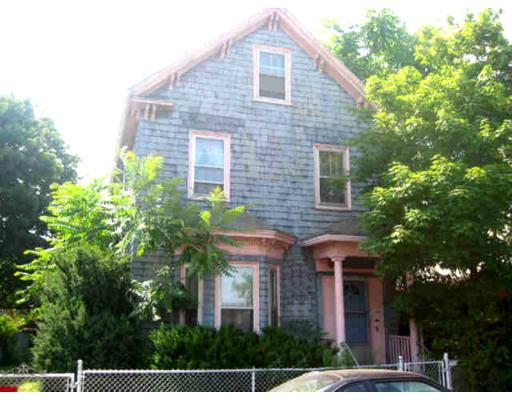
Home of the Week – “Uninhabitable Magnificence”

Price: $599,000
Style: Bracketed Italianate
Built: 1872
Rooms: 9
Bedrooms: 3
Bathrooms: 2
Sewer: City

CAMBRIDGE – At first glance, the “patina” on this 1872 Bracketed Italianate seems to bring an observer back in time, to the days when Grant was in the White House and Lewis Carroll ignited the country’s imagination with the publication of his Wonderland sequel “Through the Looking Glass”.

But upon closer inspection, one can’t seem to fail to notice that this house, a quiet oasis among the hustle and bustle of upscale Porter Square, is totally uninhabitable.

Priced wisely, this home not only boasts wood floors and convenient laundry hookups, it lacks “heat or water service”.

As if to say “Come, revel in me”, this house beckons that extraordinary individual visionary who can appreciate all that this special home has to offer and doesn’t mind adding the “Fit and Polish” reminiscent of days gone by.

Don’t miss this chance to own a true classic and by all means please bring your personal home renewal specialists along for the viewing.